Lee County service area

Site and utility work for Lee County growth.

Underground utility and site work bid support for commercial, development, and municipal projects across Lee County, Florida.

Fort MyersCape CoralBonita SpringsEsteroFort Myers Beach
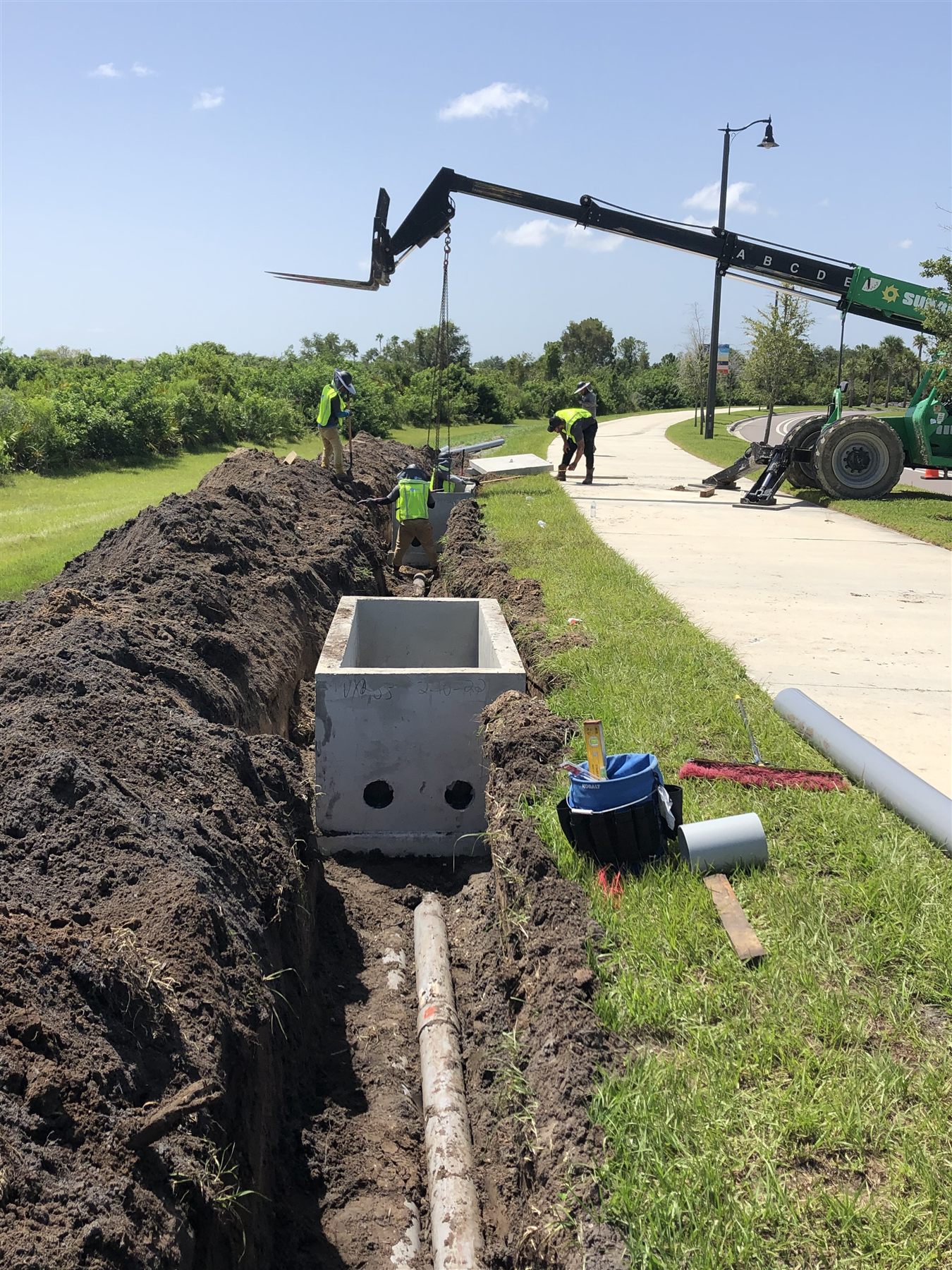
Underground utility structure installation beside a Lee County roadway

Lee County projects range from dense redevelopment and occupied commercial sites to large residential communities and expanding infrastructure corridors. The bidding challenge is rarely limited to installed quantities. Traffic, existing utilities, groundwater, inspection schedules, storm readiness, public access, and coordination with vertical construction can determine whether a practical scope succeeds in the field.

Bravo Site Works reviews underground utility, earthwork, lift-station, and related restoration opportunities throughout Lee County, including Fort Myers, Cape Coral, Bonita Springs, Estero, and Fort Myers Beach. Project-specific capability confirmation is required for directional drilling and paving or concrete scopes. Send the current plans, project location, bid date, and schedule constraints so the review can focus on actual conditions.

Lee County bid support

Start with location, scope, and schedule.

Send the current plan link and identify the bid date, project phase, and required turnover milestone.

Babcock Ranch and Burnt Store Road connections

The Babcock Ranch area and the Burnt Store Road corridor connect major development and infrastructure activity across northern Lee and Charlotte counties. Utility capacity, long runs, roadway interfaces, phased community delivery, drainage, and access planning can make these projects particularly sequencing-sensitive. Early review should identify release areas, long-lead components, temporary routing, and connections to existing systems.

Services reviewed in Lee County

Project teams can request review of the following scopes. Directional drilling and paving or concrete require project-specific confirmation before they are represented as available.

Additional field capabilities

Fiber installation, demolition, land clearing, FDOT-governed work, right-of-way work, night work, underground stormwater retention systems, and project-specific gas installation can be reviewed as part of the same bid conversation.

Review additional capability details

County-specific preconstruction checklist

  • Coordinate utility phasing with building-pad, roadway, and stormwater releases.
  • Plan groundwater, rain recovery, and temporary drainage around the excavation sequence.
  • Verify public and private utility conflicts before finalizing tie-ins or trenchless crossings.
  • Account for maintenance of traffic, occupied-site access, and seasonal activity where applicable.
  • Build testing, inspection, as-built, and turnover milestones into the baseline schedule.

Representative project example

Project facts pending: this profile is a layout and content placeholder, not a claim of completed work.

Fort Myers utility extension profile

Representative project placeholder for a phased water, sewer, and storm package supporting a commercial or mixed-use site in the Fort Myers area.

View representative profile

Lee County FAQs

Local standards and jurisdiction change the answer.

These county-specific answers help project teams identify the utility owner, governing documents, verification needs, and approval path.

Content reviewed July 29, 2026. Regulatory and utility requirements should be reconfirmed for each project.

01 Does Lee County Utilities govern every utility project in Lee County?

No. The exact parcel, municipality, utility franchise area, asset owner, and right-of-way owner determine the governing standards and approvals. A Fort Myers, Cape Coral, Estero, or unincorporated Lee County address should be checked against the applicable utility and jurisdiction before design or pricing assumptions are finalized.

Official reference: Lee County utility service and franchise maps

02 Can Lee County Utilities record drawings be used as verified field locations?

Lee County Utilities identifies record information as a planning resource; field verification is still required. The project team should combine available records with current locates, survey, potholing requirements, and utility-owner direction before relying on an alignment or depth for excavation, crossings, or connections.

Official reference: Lee County Utilities Design Manual

03 Who has utility jurisdiction near Babcock Ranch or the Burnt Store Road corridor?

Jurisdiction should be confirmed at the parcel and project level. County boundaries, municipal limits, franchise areas, road ownership, and the serving utility may not follow the shorthand used for a growth corridor. Bid documents should name the utility owner, roadway authority, permit set, and acceptance path instead of inferring them from a Lee County mailing address.

04 What should be reviewed for a developer-contributed utility project in Lee County?

Confirm the serving utility, current design manual, submittal and review path, inspection and testing responsibilities, asset-conveyance documents, record information, certifications, fees, corrective work, and final acceptance. The contract should assign responsibility for each deliverable and identify which release depends on utility acceptance.

Official reference: Lee County developer-project forms

05 Which Southwest Florida counties does Bravo Site Works serve?

The current service area is limited to Lee, Collier, Charlotte, Sarasota, and Manatee counties. The exact municipality, utility provider, right-of-way owner, permitting agency, project type, and schedule still determine fit for an individual opportunity.

06 Does Bravo Site Works conduct a site walk before every bid?

Yes. Bravo conducts a site walk for every job it bids. The review focuses on access, staging, existing conditions, active operations, neighboring improvements, haul routes, work windows, and interfaces that may not be fully visible in the documents. The site walk supplements the plans and project records; it does not replace survey, utility locating, geotechnical investigation, or engineered direction.

07 What additional capabilities can be included with Bravo’s core utility and site-work scopes?

Additional capabilities include complete fiber installation, demolition, land clearing, FDOT-governed work, public right-of-way work, night work, underground stormwater retention systems, and project-specific gas installation, including underground propane systems serving generators. The bid review confirms delivery responsibilities, credentials, permits, inspections, work windows, and scope boundaries for the actual project.

08 What should a general contractor include with a site-work or underground-utility bid request?

Send the current civil plans, specifications, geotechnical report, addenda, bid form, quantity information, project schedule, phasing requirements, testing responsibilities, and known site constraints. Identify the utility owner, bid deadline, anticipated mobilization, alternates, bonding requirements, traffic-control needs, and any scope boundaries that remain open. A complete package helps the estimating team identify conflicts and exclusions before proposals are compared.

County-specific review

Invite Bravo Site Works to the bid.

Include the plan-room link, county, current design milestone, due date, and expected mobilization.