Charlotte County service area

Infrastructure work for Charlotte County corridors.

Utility and site work planning for Punta Gorda, Port Charlotte, Babcock Ranch, and the Burnt Store Road corridor.

Punta GordaPort CharlotteBabcock RanchEnglewood
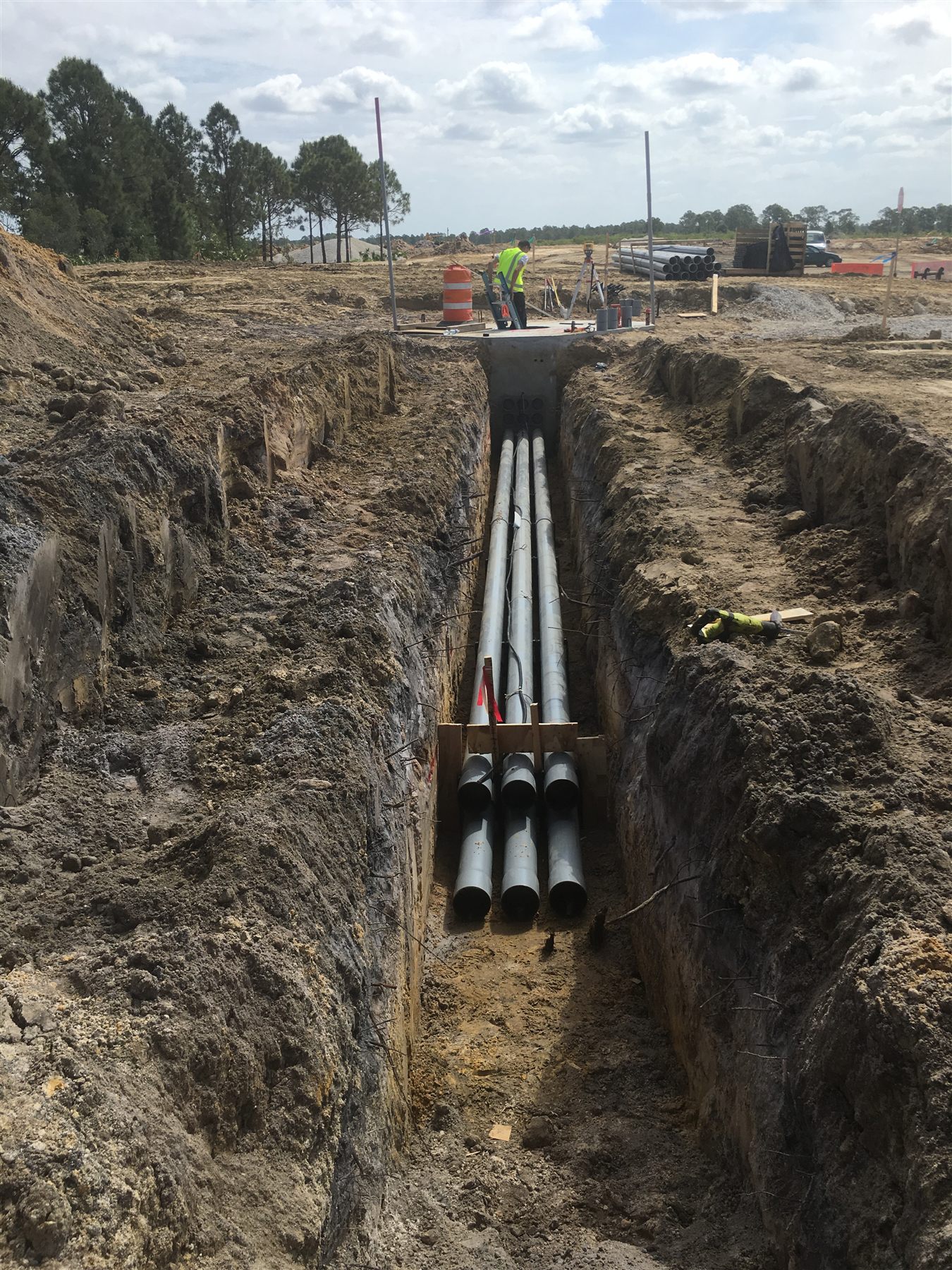
Multiple underground conduits installed along a Charlotte County development corridor

Charlotte County continues to see infrastructure demand tied to residential communities, commercial growth, roadway improvements, and utility expansion. Projects around Punta Gorda, Port Charlotte, Babcock Ranch, Englewood, and the Burnt Store Road corridor may require long-range phasing, deep coordination with roadway and drainage work, and careful planning for tie-ins to existing systems.

Bravo Site Works reviews underground utility, earthwork, lift-station, and related restoration opportunities throughout Charlotte County. Early plan access helps identify utility conflicts, release priorities, material lead times, inspection milestones, and the connection between underground work and community or roadway schedules. Directional drilling and paving or concrete scopes require project-specific confirmation.

Charlotte County bid support

Start with location, scope, and schedule.

Send the current plan link and identify the bid date, project phase, and required turnover milestone.

Burnt Store Road and Babcock Ranch demand coordinated releases

The Burnt Store Road corridor and Babcock Ranch growth area connect development activity across Charlotte and Lee counties. Large sites can contain multiple phases, utility loops, stormwater systems, lift stations, roadway crossings, and staged turnover dates. The construction plan should define which systems must be operational for each release and how crews will maintain access while future phases continue.

Services reviewed in Charlotte County

Project teams can request review of the following scopes. Directional drilling and paving or concrete require project-specific confirmation before they are represented as available.

Additional field capabilities

Fiber installation, demolition, land clearing, FDOT-governed work, right-of-way work, night work, underground stormwater retention systems, and project-specific gas installation can be reviewed as part of the same bid conversation.

Review additional capability details

County-specific preconstruction checklist

  • Break large civil packages into release zones tied to utility and roadway milestones.
  • Coordinate storm drainage, lake or pond work, and temporary site drainage with mass grading.
  • Confirm tie-in windows, shutdown requirements, testing, and utility acceptance procedures.
  • Protect future corridors and sleeves while active phases move toward turnover.
  • Track redlines and as-built information continuously across long-duration projects.

Representative project example

Project facts pending: this profile is a layout and content placeholder, not a claim of completed work.

Charlotte County utility corridor profile

Representative project placeholder for a phased common-trench and underground infrastructure package near the Burnt Store Road growth corridor.

View representative profile

Charlotte County FAQs

Local standards and jurisdiction change the answer.

These county-specific answers help project teams identify the utility owner, governing documents, verification needs, and approval path.

Content reviewed July 29, 2026. Regulatory and utility requirements should be reconfirmed for each project.

01 Which Charlotte County utility standards and drawings should be used?

Confirm the serving utility, current design-compliance standards, standard drawings, approved products, project-specific comments, and roadway or right-of-way requirements. Record the version used for pricing and identify any pending approvals so the proposal is tied to a visible technical baseline.

Official reference: Charlotte County design-compliance standards

02 Are CADD files and record drawings part of Charlotte County utility closeout?

Charlotte County publishes design and compliance requirements that include digital and record-information deliverables for utility assets. The engineer, owner, utility, and contractor should confirm the required coordinate system, file format, attributes, certifications, review sequence, and party responsible for corrections before turnover.

Official reference: Charlotte County standard drawings and details

03 Are there special landscape requirements around a Charlotte County lift station?

Charlotte County publishes lift-station landscape guidance, but applicability and final design depend on the station, parcel, utility review, access, visibility, irrigation, and approved plans. Landscaping must preserve operations, maintenance access, clearances, drainage, and the accepted site layout.

Official reference: Charlotte County lift-station landscape specifications

04 How should utility coordination be approached near Babcock Ranch and Burnt Store Road?

Treat each opportunity as a parcel-level coordination exercise. Confirm county and municipal limits, development approvals, serving utilities, road ownership, drainage interfaces, easements, design standards, release sequencing, and final acceptance. Growth-corridor names are useful context, but they do not identify the governing agency by themselves.

Official reference: Charlotte County Burnt Store Area Plan

05 Which Southwest Florida counties does Bravo Site Works serve?

The current service area is limited to Lee, Collier, Charlotte, Sarasota, and Manatee counties. The exact municipality, utility provider, right-of-way owner, permitting agency, project type, and schedule still determine fit for an individual opportunity.

06 Does Bravo Site Works conduct a site walk before every bid?

Yes. Bravo conducts a site walk for every job it bids. The review focuses on access, staging, existing conditions, active operations, neighboring improvements, haul routes, work windows, and interfaces that may not be fully visible in the documents. The site walk supplements the plans and project records; it does not replace survey, utility locating, geotechnical investigation, or engineered direction.

07 What additional capabilities can be included with Bravo’s core utility and site-work scopes?

Additional capabilities include complete fiber installation, demolition, land clearing, FDOT-governed work, public right-of-way work, night work, underground stormwater retention systems, and project-specific gas installation, including underground propane systems serving generators. The bid review confirms delivery responsibilities, credentials, permits, inspections, work windows, and scope boundaries for the actual project.

08 What should a general contractor include with a site-work or underground-utility bid request?

Send the current civil plans, specifications, geotechnical report, addenda, bid form, quantity information, project schedule, phasing requirements, testing responsibilities, and known site constraints. Identify the utility owner, bid deadline, anticipated mobilization, alternates, bonding requirements, traffic-control needs, and any scope boundaries that remain open. A complete package helps the estimating team identify conflicts and exclusions before proposals are compared.

County-specific review

Invite Bravo Site Works to the bid.

Include the plan-room link, county, current design milestone, due date, and expected mobilization.