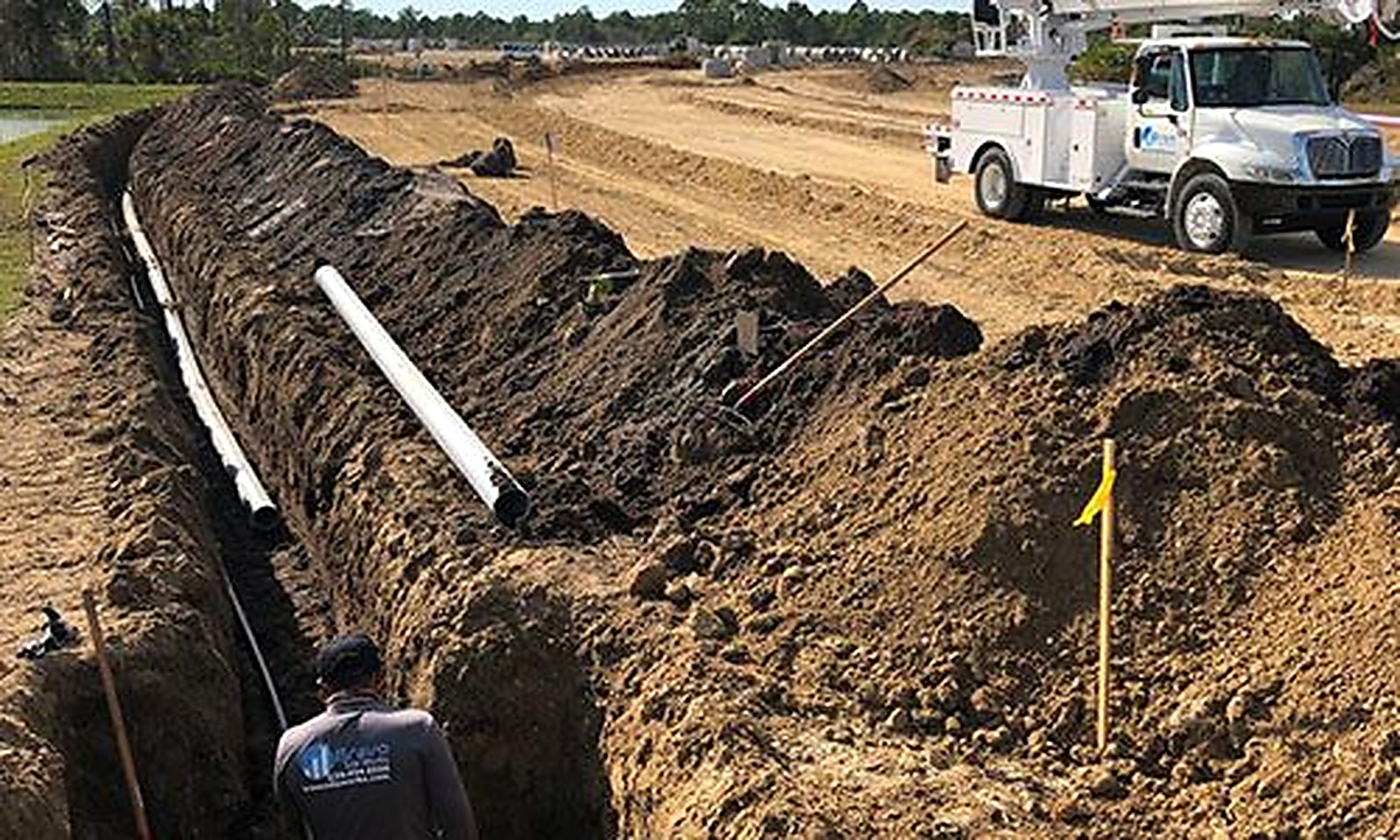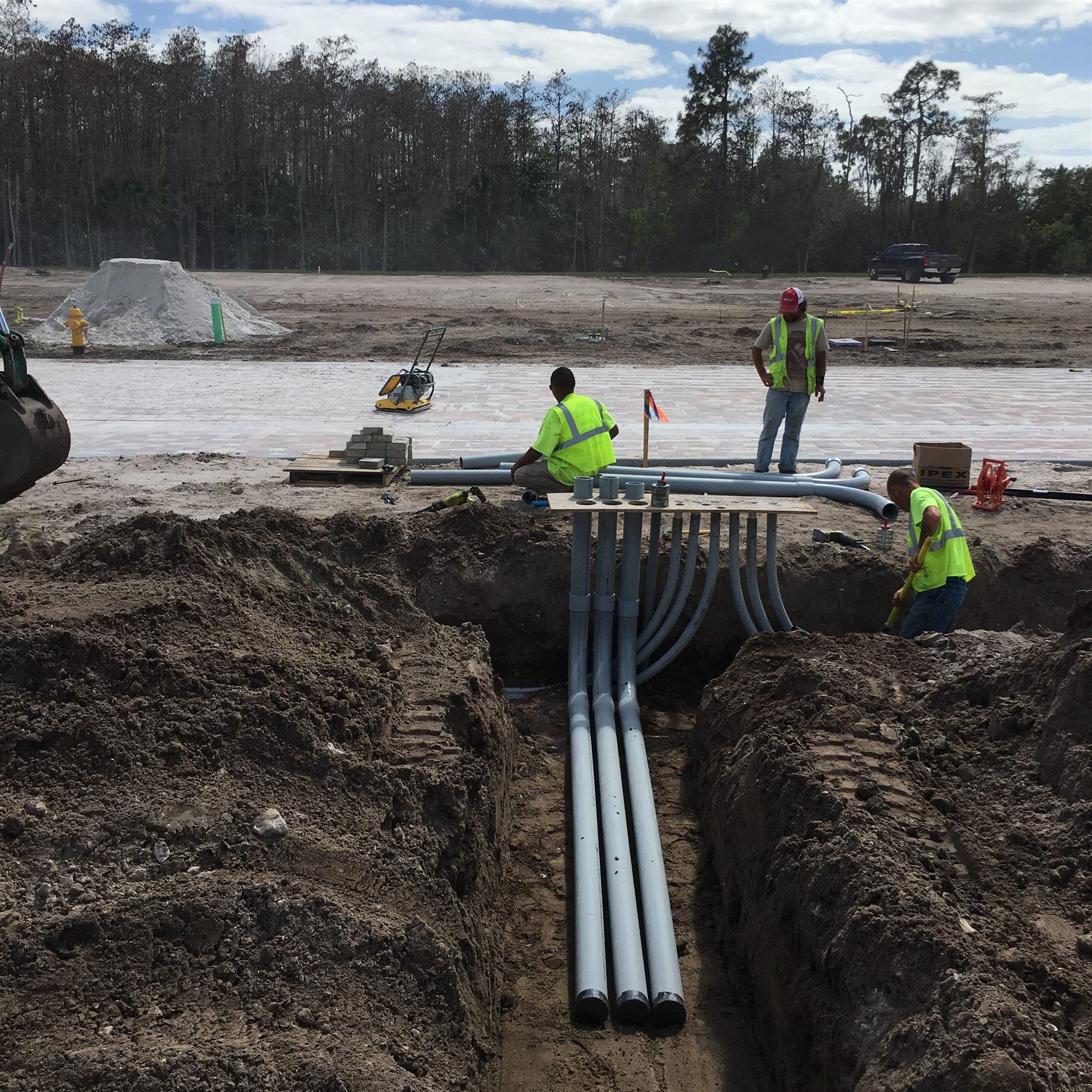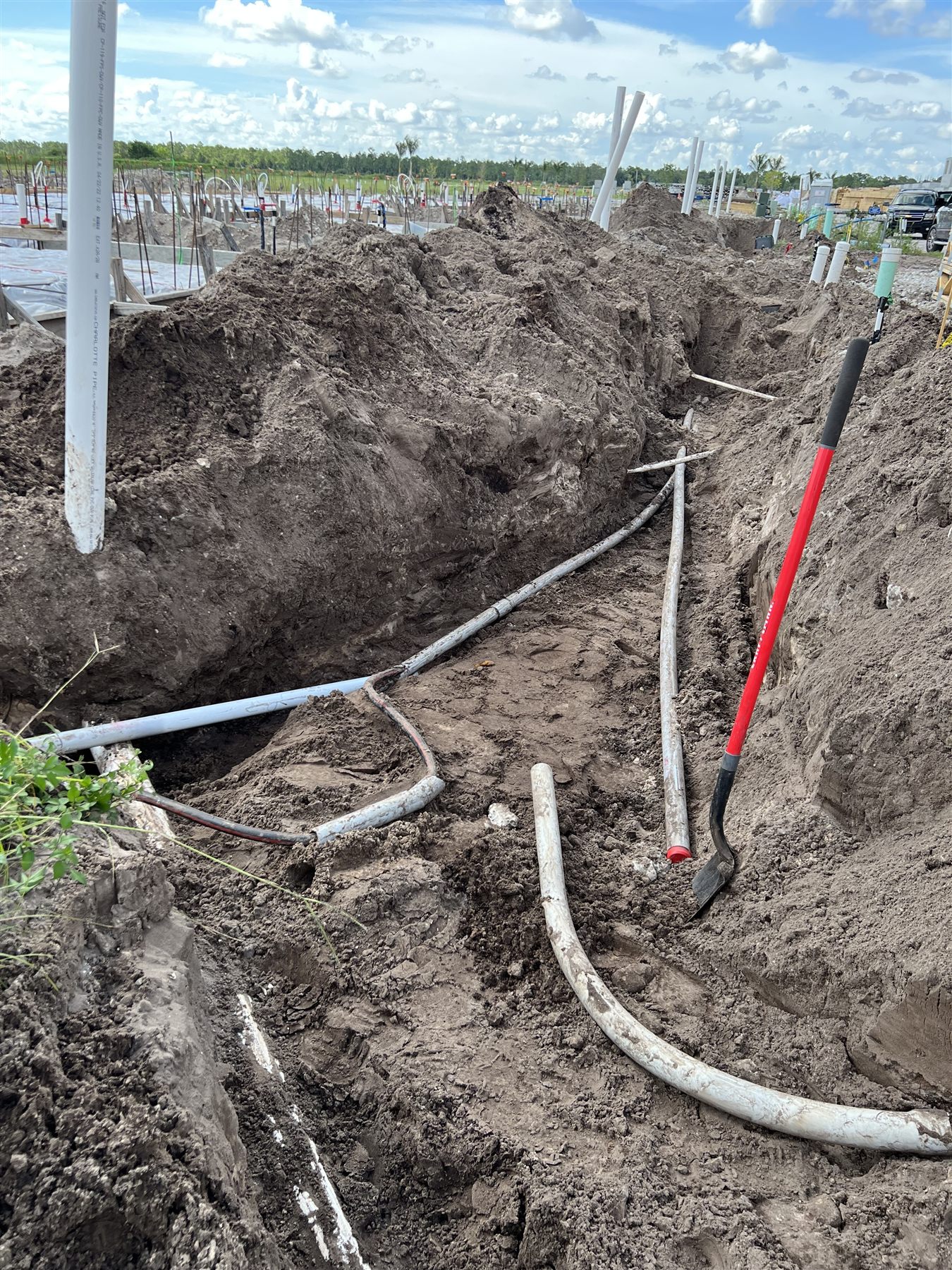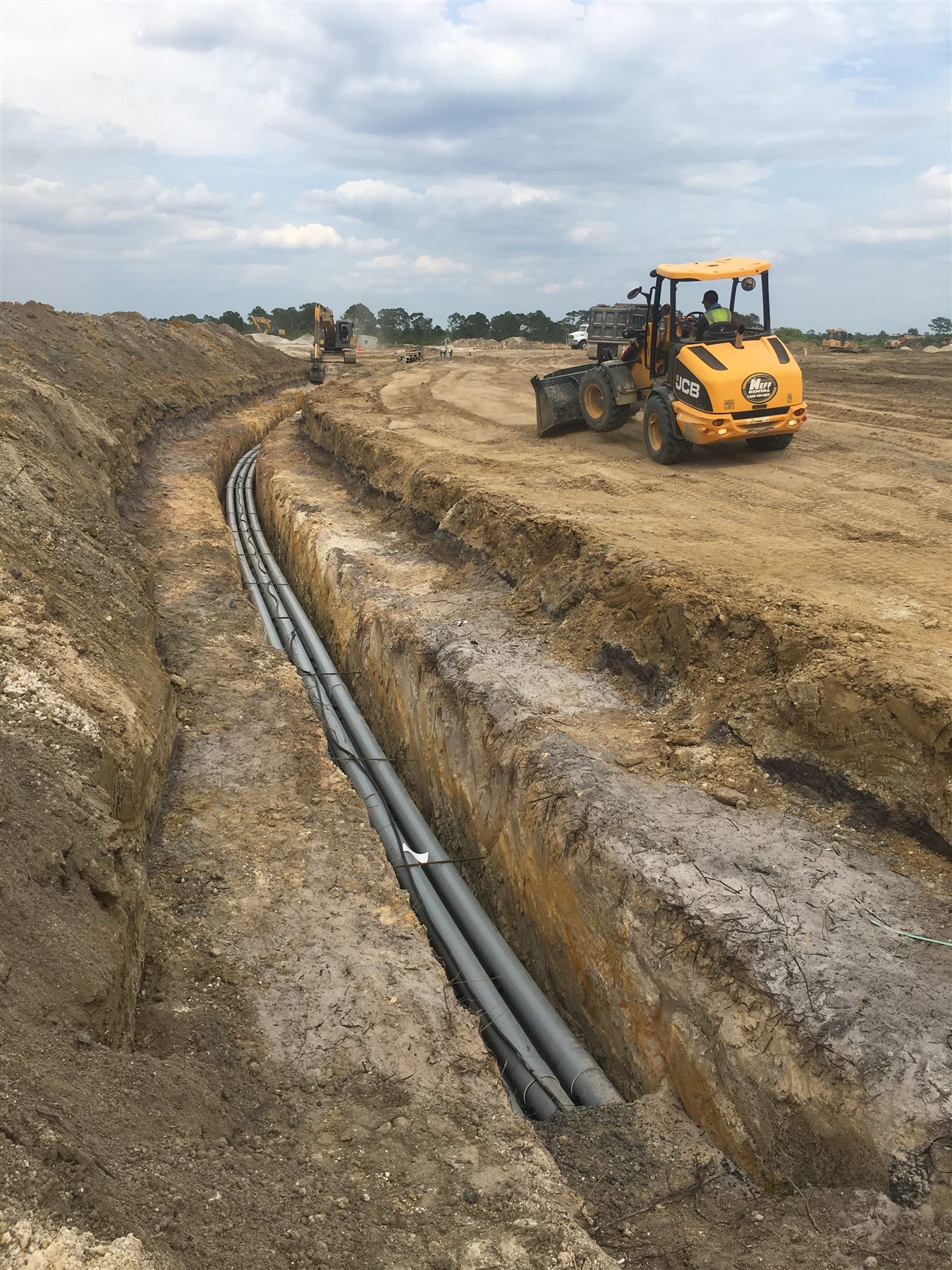
An excavation bid based only on plan dimensions assumes the ground behaves as expected. When rock, cemented material, dense layers, unsuitable soils, or variable groundwater are present, that assumption can change production, equipment, trench geometry, dewatering, material handling, vibration controls, backfill, and schedule. The correct response is not to label every Collier County site as “rock.” It is to build the bid from project-specific subsurface evidence.
General contractors and developers should make geotechnical and existing-condition information available early. Bidders should explain how that information was interpreted, where it is incomplete, and which conditions trigger a change in method or price.
Read the investigation against the actual excavation
Compare boring locations and depths with proposed utilities, ponds, structures, building pads, and roadway cuts. A boring can describe its location well without representing the entire alignment. Long runs and deep structures may cross conditions that were not directly sampled.
Review soil descriptions, refusal, rock or cementation notes, groundwater observations, laboratory results, recommended excavation considerations, reuse suitability, and limitations stated by the geotechnical professional. The site development and earthwork quantity plan should also identify cuts, fills, disposal, import, and the surfaces used for takeoff.
If the information does not reach critical excavation depths or major areas are unsampled, raise the question before bid. Additional investigation is an owner and design-team decision, but the estimator should not hide the gap.
Define what the bid calls rock or unsuitable material
Contract language should establish how changed conditions are identified and measured. “Rock excavation” can mean different things depending on specifications, equipment capability, production threshold, or formal definition. The bid should state what is included in base excavation, what is excluded, and how additional effort will be documented.
The same applies to unsuitable material. Organic soil, wet material, debris, contaminated soil, or material that cannot meet compaction requirements may require undercut, treatment, drying, blending, export, or replacement. Responsibility for testing, direction, measurement, transport, disposal, and imported material needs a clear process.
Method changes affect more than excavation cost
Hard excavation may require different buckets, teeth, rippers, breakers, saws, specialty equipment, or approved blasting methods. Each option changes access, noise, vibration, dust, production, trench width, over-excavation risk, equipment wear, and interaction with neighboring improvements.
For utility work, method changes can affect line and grade, bedding, pipe handling, structure bases, and dewatering. Over-excavation may require engineered backfill or concrete. Broken material may not be suitable for reuse near pipe or under finished areas. Haul and disposal assumptions can become a significant part of the price.
Coordinate groundwater and hard layers together
Rock or cemented layers can change how water enters an excavation. Fractures may transmit water, while dense layers may perch it. Pumping a visible low point may not control the full excavation. The dewatering plan should use the geotechnical information, actual depth, discharge requirements, and responsible professional's direction.
At a Collier County site, groundwater, environmental limits, occupied access, finish expectations, and subsurface variability may overlap. The bid should separate known requirements from allowances and unknowns so the project team can compare risk consistently.
Use a quantity and verification process the field can follow
If unit prices or allowances are used, define the unit, measurement method, documentation, authorization, and included activities. Is the quantity measured in place, by truck, by survey, or by another method? Does the rate include excavation, processing, loading, hauling, disposal, replacement material, compaction, testing, and schedule impact?
The superintendent and project manager should know what evidence is required before proceeding. Daily reports, photographs, survey, testing, truck tickets, equipment records, and written direction may all be relevant. A process that exists only in the contract office will not work when crews uncover a changed condition.
Protect schedule decisions with early alternatives
Identify the excavations most sensitive to subsurface risk: deep sewer, lift stations, large structures, pond cuts, roadway grades, and utility crossings. Consider alternate sequences, equipment availability, approved material sources, disposal locations, and design responses before those areas control the entire project.
The goal is not to predict every buried condition. It is to create a transparent baseline and a fair, timely method for responding when conditions differ.
Preparing a Collier County bid with significant excavation? Send Bravo Site Works the current civil and geotechnical documents. A project-specific review can connect subsurface information to quantities, method, groundwater, and schedule assumptions before award.