The 2026 Southwest Florida development pipeline is not one list of guaranteed projects. It is a mix of private development, public capital planning, utility programs, roadway and drainage needs, recovery work, and long-range growth decisions. Schedules, funding, approvals, procurement methods, and scopes can change. Contractors should use official plans as demand signals, then verify each opportunity through current solicitations and project documents.
Across Lee, Collier, Charlotte, Sarasota, and Manatee counties, five patterns matter for underground utility and site-work planning: phased community infrastructure, utility renewal and expansion, stormwater investment, corridor and roadway interfaces, and a stronger focus on constructability and turnover evidence.
Phased development keeps infrastructure on the critical path
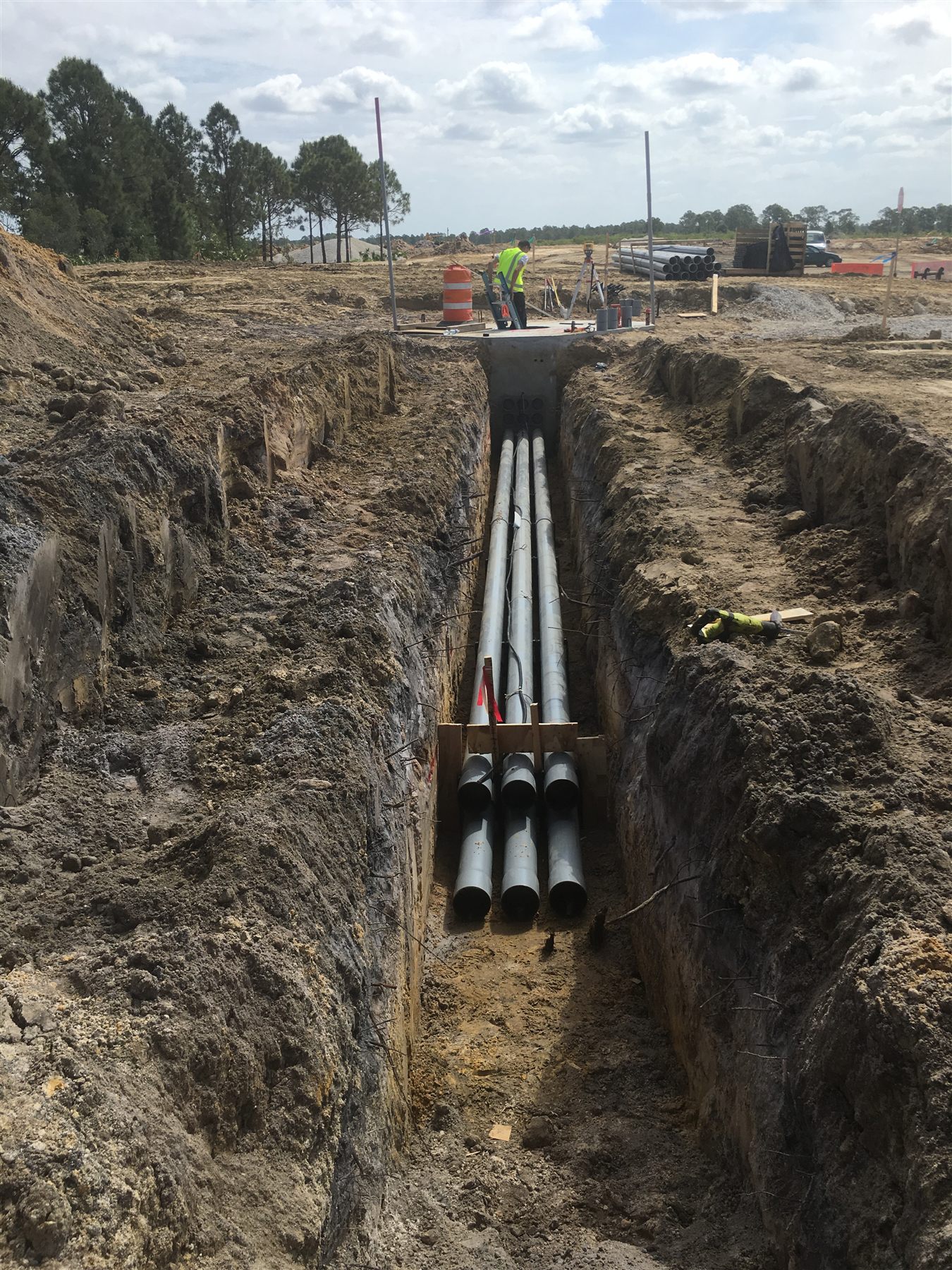
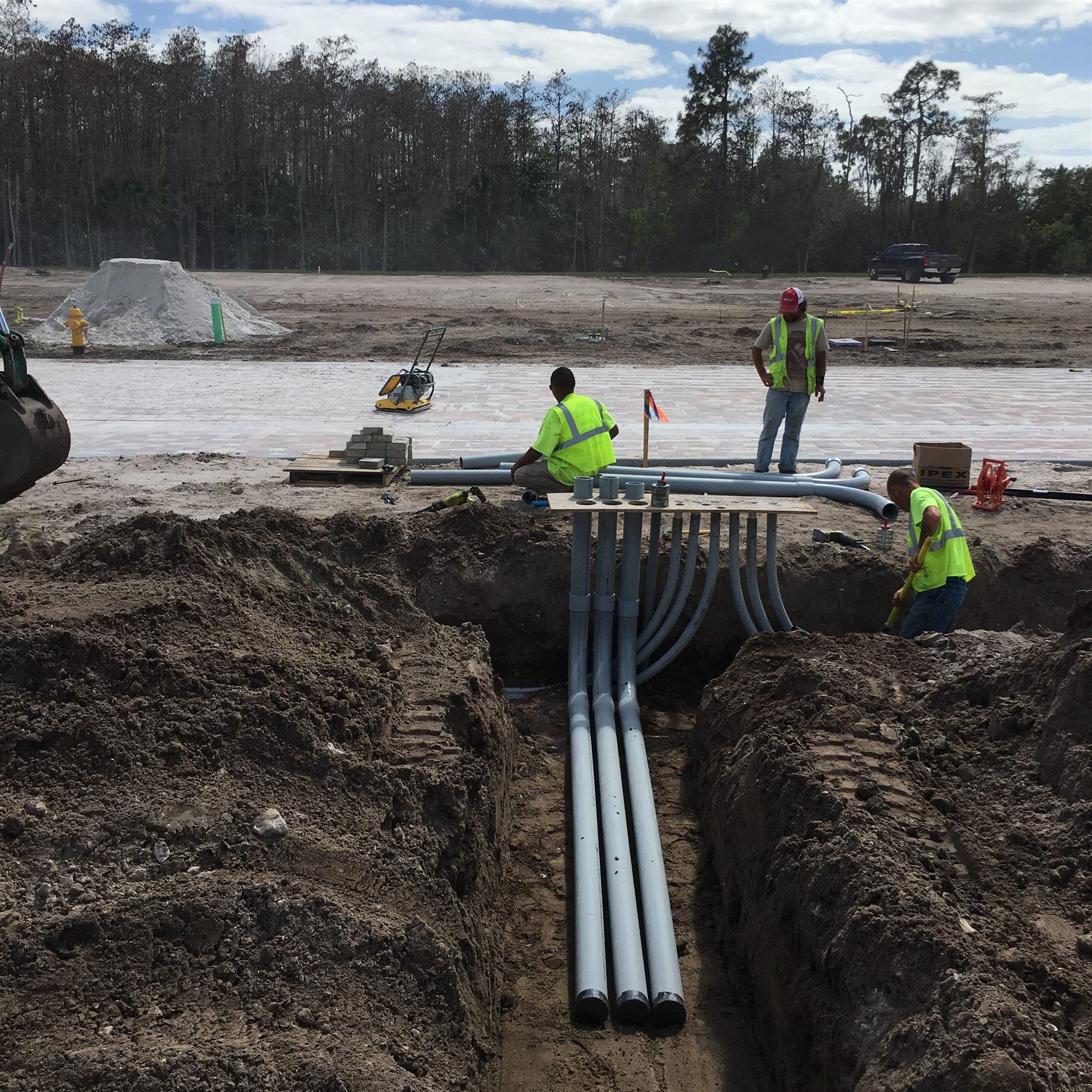
Large residential and mixed-use projects need roads, water, sewer, stormwater, lift stations, power, communications, and operational releases in a coordinated sequence. The work may move by neighborhood, commercial parcel, roadway segment, or utility zone rather than one completion date.
That favors contractors who can explain phase dependencies and maintain closeout records over long durations. The site development and earthwork plan should connect mass grading, ponds, temporary drainage, utility corridors, access, building pads, and roadway subgrade to each release. Future stub-outs and crossings need protection and usable records.
Public plans signal continued utility and corridor coordination
Lee County's official Lee Plan page includes a 2026 capital-improvement update and long-range water-supply planning references. The localized Lee County construction page connects that planning context to bid and sequencing questions. Charlotte County publishes an adopted 2026 capital-improvement program and project information tied to the Burnt Store Road area. Sarasota County maintains a capital projects portal and stormwater program information.
These sources indicate planning activity; they do not promise bid dates or contractor awards. Teams should confirm current scope, funding, design phase, procurement route, and schedule with the responsible agency.
Stormwater remains a construction and operations priority
Stormwater demand includes new-development systems, basin improvements, maintenance access, recovery, and adaptation of existing infrastructure. For contractors, the opportunity is broader than pipe quantity. Projects need temporary drainage, erosion controls, structure installation, grading tolerances, outfall coordination, cleaning, inspection, and usable turnover records.
Sarasota County's stormwater materials describe capital improvements and basin-based programs, while other counties maintain their own current plans and priorities. Each bid should be read against the applicable permit, design criteria, environmental controls, and current agency requirements.
Lift stations connect civil work to power and controls
Growth and utility expansion can create new or modified lift-station needs. These projects concentrate schedule risk in equipment procurement, deep excavation, groundwater, force-main connection, permanent power, controls, telemetry, backup provisions, startup, and clearance.
The lift station bid should use one responsibility matrix across civil, mechanical, electrical, controls, utility, and owner tasks. Project teams that place permanent power or telemetry at the end of the schedule may find that installed systems are not ready for service.
Corridor work rewards early conflict investigation
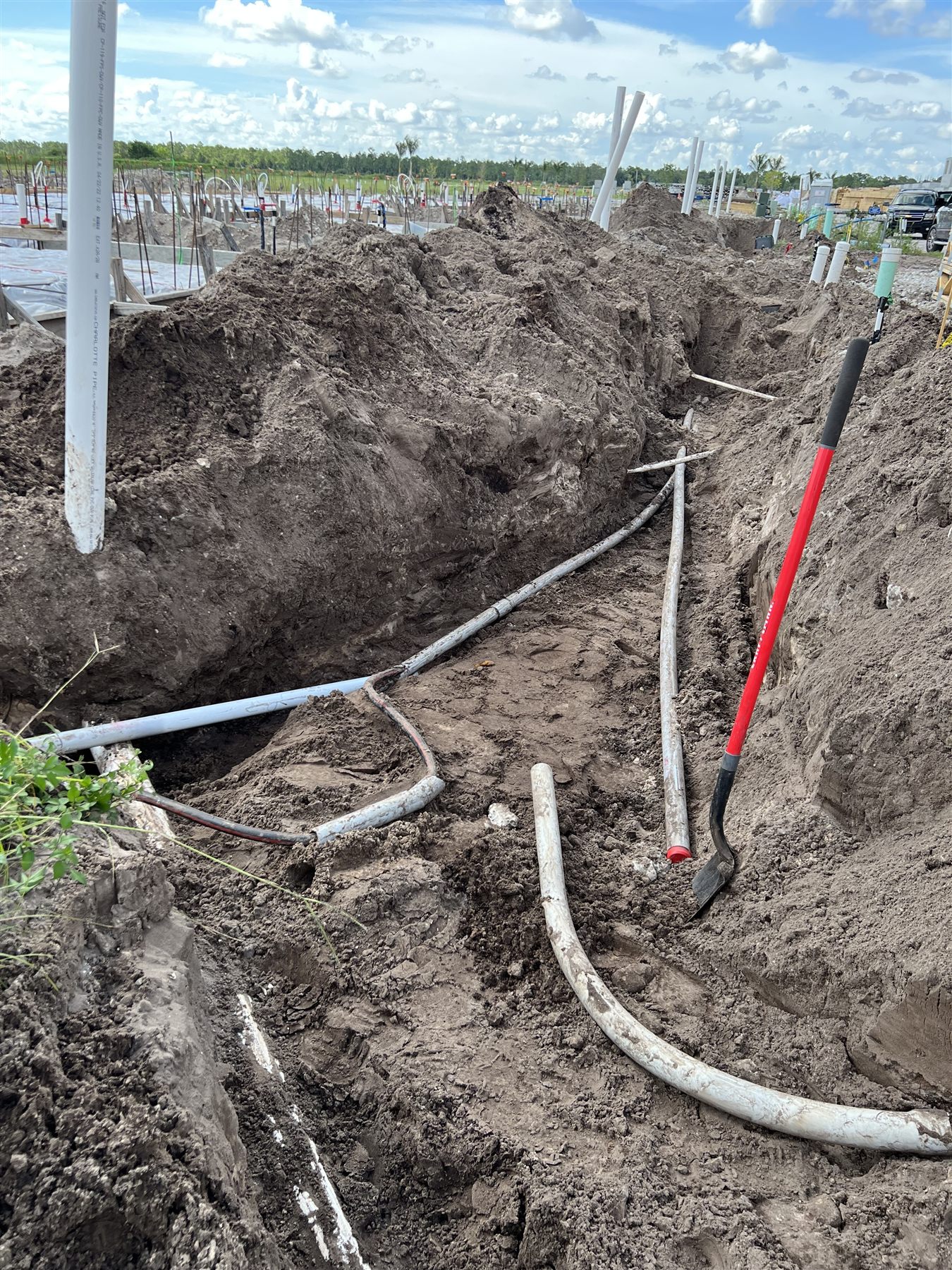
Road widening, new connectors, utility extensions, and phased development create crossings among existing systems, proposed utilities, drainage, lighting, communications, and future connections. The Burnt Store Road area is one visible example, but the same coordination problem appears throughout the five-county service area.
Contractors should expect stronger demand for current utility records, locating, potholing, survey, conflict matrices, staged traffic and access plans, and real-time redline information. Trenchless methods may be useful at selected crossings, but feasibility and availability must be confirmed from site-specific information.
Owners are asking for clearer risk and closeout evidence
Price remains central, but sophisticated buyers increasingly need explicit assumptions, schedule logic, safety and quality systems, documentation, and turnover plans. Public and private teams want to know what is included, what remains an allowance, how changed conditions are handled, and what evidence shows that a system is accepted.
For contractors, the advantage is operational discipline: plan inspections and testing with production, maintain redlines daily, track procurement to in-service dates, and close phases continuously. Those practices improve delivery whether the market accelerates or individual projects move.
Prepare the 2026 pursuit list with filters
Build a pipeline that records county, owner, engineer, delivery method, design phase, funding or approval status, anticipated solicitation, scope fit, capacity, key risks, and next action. Separate confirmed bids from planning leads. Refresh official sources and owner contacts instead of treating an old project list as current.
For Bravo Site Works, the geographic filter remains Lee, Collier, Charlotte, Sarasota, and Manatee counties. The strongest opportunities will be the ones where plans, schedule, scope boundaries, and decision-makers are visible early enough for a useful review.
Have a 2026 project moving toward bid inside the five-county service area? Send Bravo Site Works the current documents and pursuit schedule to discuss underground utility, earthwork, lift-station, and related site-work fit.