Development pressure along the Burnt Store Road corridor creates a connected infrastructure challenge. New communities and supporting uses depend on road capacity, water, sewer, stormwater, lift stations, power, communications, public facilities, and reliable phase turnover. For construction teams, the work is not a series of isolated parcels. Decisions on one phase can shape access, utility routing, drainage, and future connections for the next.
Charlotte County's official Burnt Store Area Plan describes a coordinated planning effort for development along the corridor. That planning context is useful, but every bid still needs current project documents, utility criteria, permits, funding status, and agency direction.
Build the civil package around release criteria
On a phased project, “complete” should mean something specific. A residential or commercial release may depend on stable access, accepted water and sewer, operational storm drainage, a lift station in service, tested fire protection, temporary or final power, and documented agency clearance. Those dependencies need dates and responsible parties.
The Charlotte County service-area page emphasizes release-zone planning because long utility runs and roadway interfaces can separate physical progress from operational readiness. A pipe may be installed while testing, power, telemetry, paving, or acceptance remains on the critical path.
Coordinate corridors before finished grade closes them
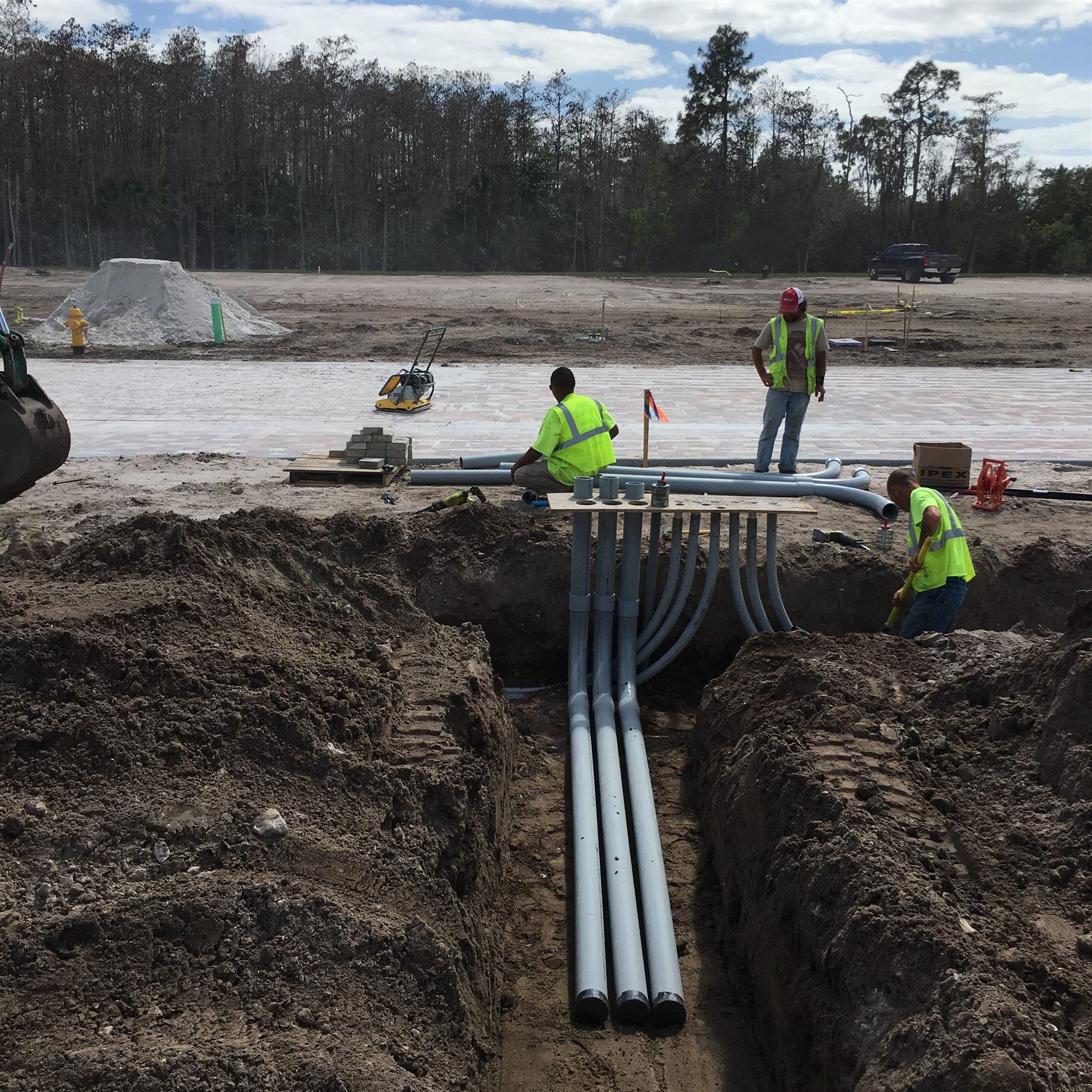
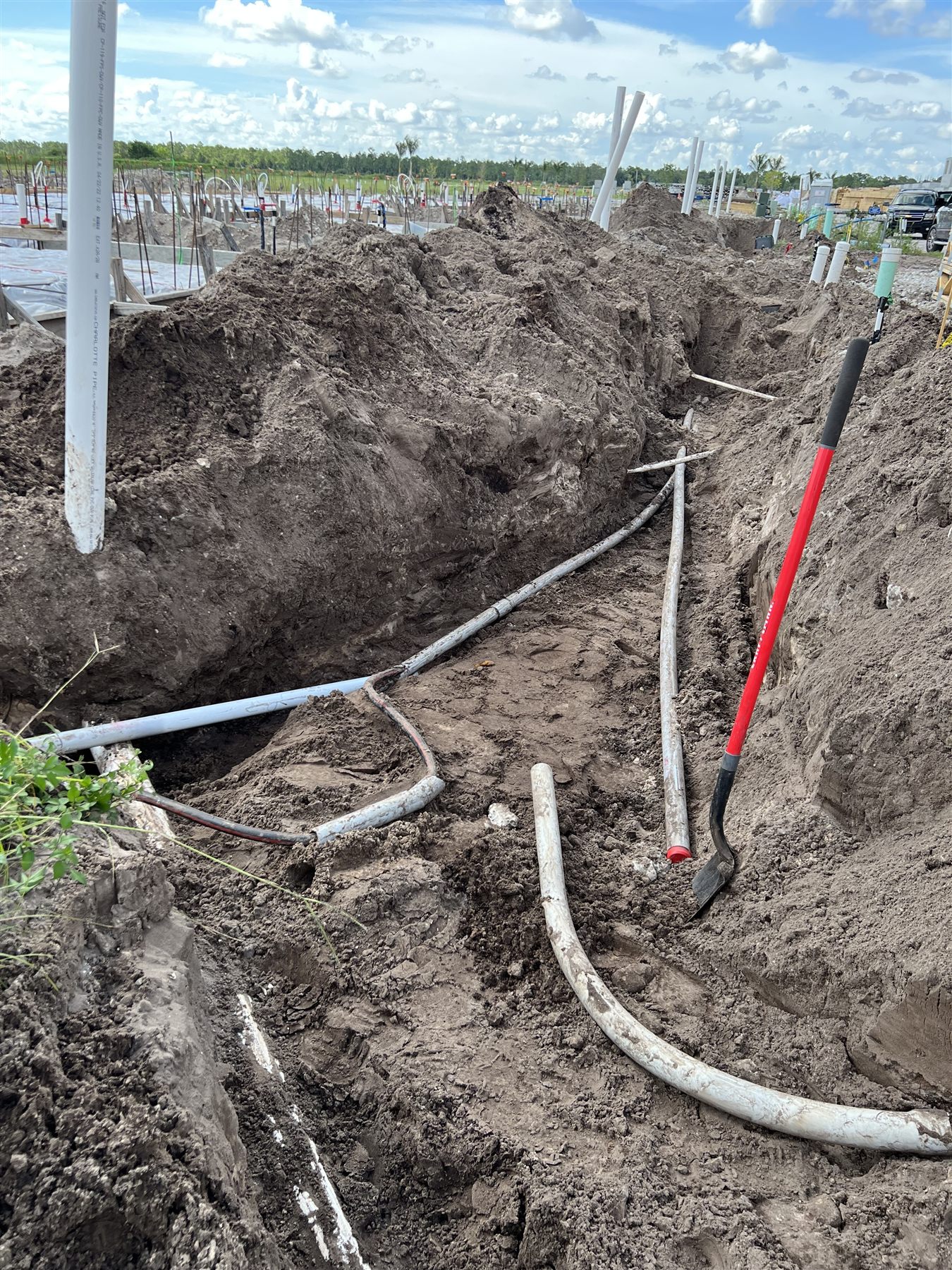
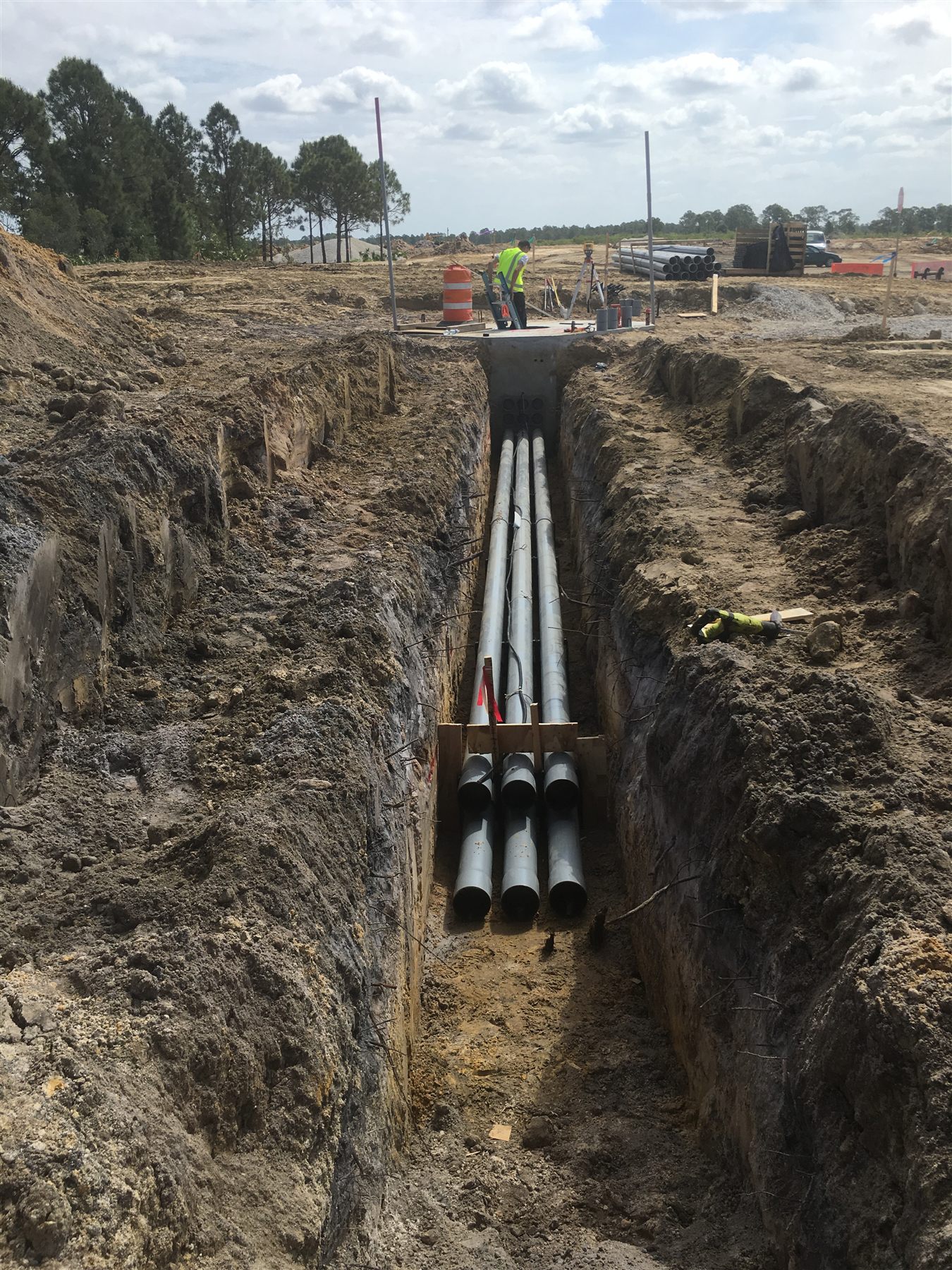
Roadway sections can carry wet utilities, drainage, common trench, sleeves, crossings, future stub-outs, lighting, and communications. Compare all discipline drawings before structures, curb, pavement, or landscape reduce access. A corridor matrix can show owner, material, size, alignment, elevation, crossing, structure, test requirement, phase, and status.
Survey control and future connection records deserve special attention. Markers can be moved by grading, and a coordinate without a usable elevation or physical reference may not be enough years later. Protect stub-outs, cap and identify them, photograph the context, and maintain redlines by phase.
Treat lift stations as system milestones
Where gravity service depends on a lift station, the in-service date can control an entire phase. Wet-well construction is only one component. Pumps, force main, permanent power, controls, telemetry, backup provisions, startup, testing, training, and utility acceptance need one integrated schedule.
Long-lead decisions should be connected to the lift station design and release plan. Confirm who owns submittals, procurement, electrical service, controls programming, startup support, and clearance. Temporary work should not be assumed to solve a permanent-system delay without owner, engineer, and utility approval.
Keep stormwater functional as the site evolves
Large developments can spend years in changing temporary conditions. Pond excavation, mass grading, future roads, stockpiles, incomplete structures, and construction traffic alter how water moves. The environmental and temporary-drainage plan should be updated as release areas change.
Each phase needs a workable route for rainfall and a recovery plan for major events. Protect completed storm systems from sediment and debris. Define when permanent structures can receive flow, who cleans them, how they are inspected, and what downstream condition must exist before connection.
Plan roadway and restoration work as a sequence
Roadways are both project access and finished infrastructure. Heavy construction may need temporary stabilization, crossings, maintenance of traffic, and staged paving before the final surface is placed. The bid should identify who maintains temporary routes, repairs construction damage, completes testing, and owns final restoration.
Coordinate curb, inlet, sidewalk, accessible-route, landscape, and utility elevations before finish work. A late adjustment to one system can force removal across several trades. Future crossings and sleeves should be resolved before pavement makes them expensive.
Use official plans as context, not as project promises
Charlotte County also publishes information about proposed public infrastructure through its 2026 sales-tax extension page. Such sources help teams monitor corridor direction, but they do not guarantee design, funding, schedule, procurement, or contractor opportunity for a specific project. Verify current status with the responsible public agency and solicitation documents.
The contractor's job is to translate approved project information into a buildable sequence. That means explicit assumptions, current utility criteria, coordinated corridors, practical access, tested systems, and phase-by-phase closeout.
Pricing work along Burnt Store Road or near Babcock Ranch? Send Bravo Site Works the overall phasing plan and current bid set. A corridor-focused review can identify utility, earthwork, drainage, lift-station, access, and turnover dependencies before mobilization.