Growth around Babcock Ranch and the Burnt Store Road corridor is more than a collection of individual building pads. It creates connected demand for roads, water, sewer, stormwater, lift stations, power, communications, community facilities, and phased site delivery. For general contractors and developers, that scale changes how civil packages should be bid and managed.
A long-duration corridor project cannot depend on one final completion date. Infrastructure has to become useful in planned increments while future phases remain under construction. The field plan should connect earthwork, utilities, roadways, testing, permanent power, agency acceptance, and as-built documentation to each release.
Think in operational systems and release zones
Large sites are easier to manage when the project team defines what each phase must accomplish. A release zone might require a stable building pad, fire access, operational water, accepted sewer, functioning storm drainage, a lift station in service, temporary or final power, and an approved roadway condition. Those dependencies should be visible before the schedule is built.
The site development and earthwork package should support those releases without trapping future utilities or creating repeated regrading. Mass-balance decisions, pond excavation, haul routes, temporary drainage, and stockpile locations need to reflect where crews will work next—not only the final surface model.
Protect future corridors while current phases move
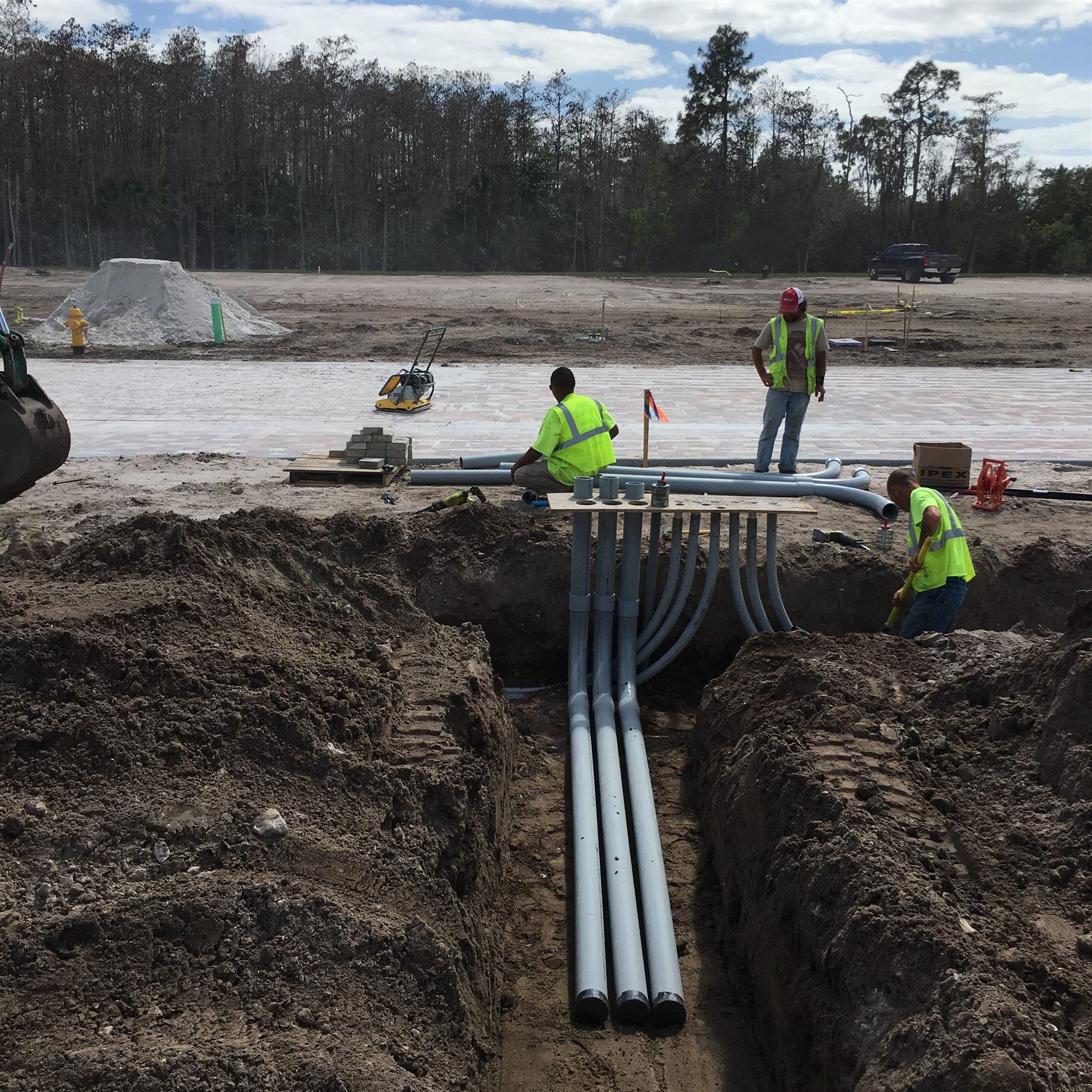
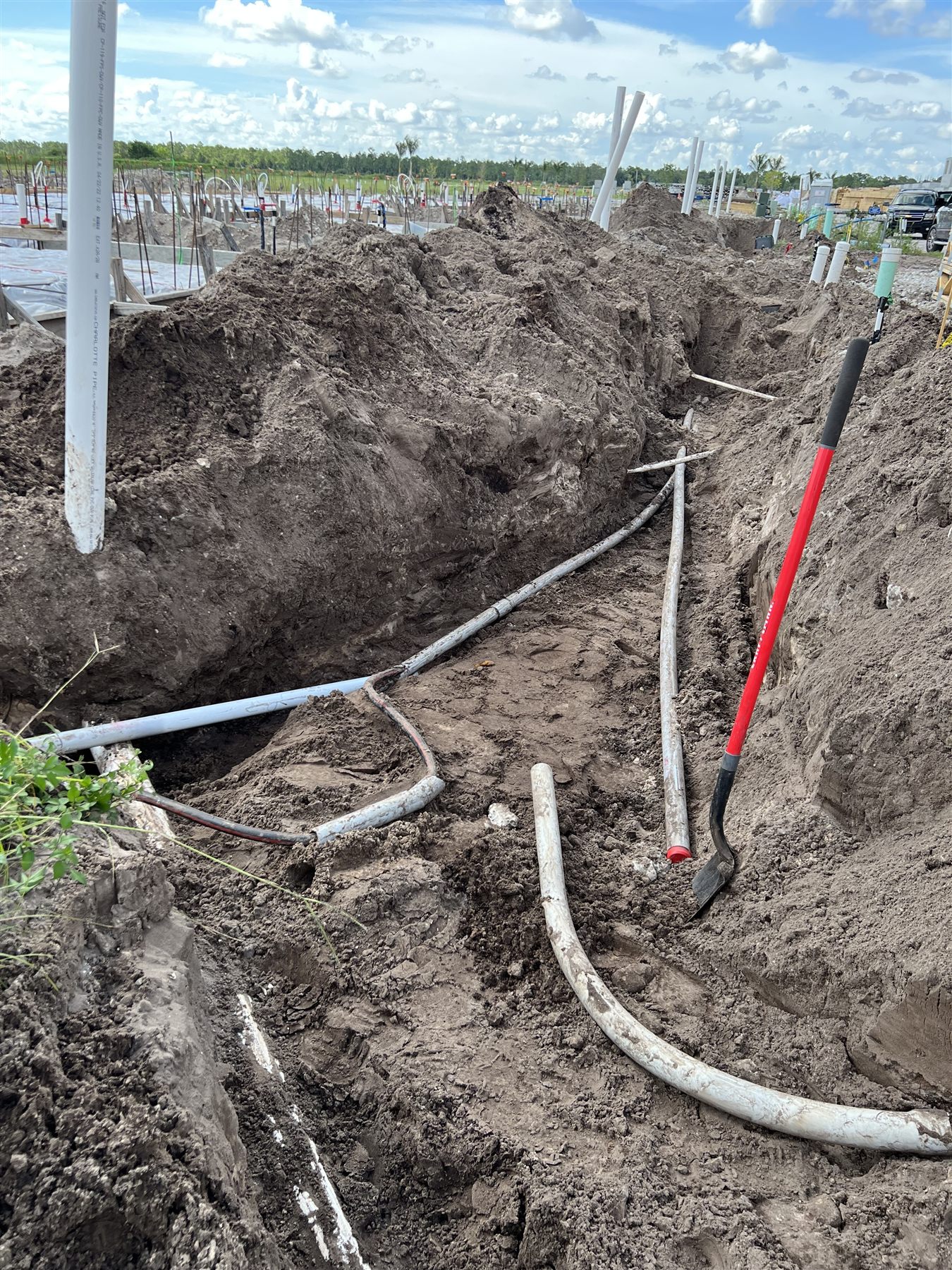
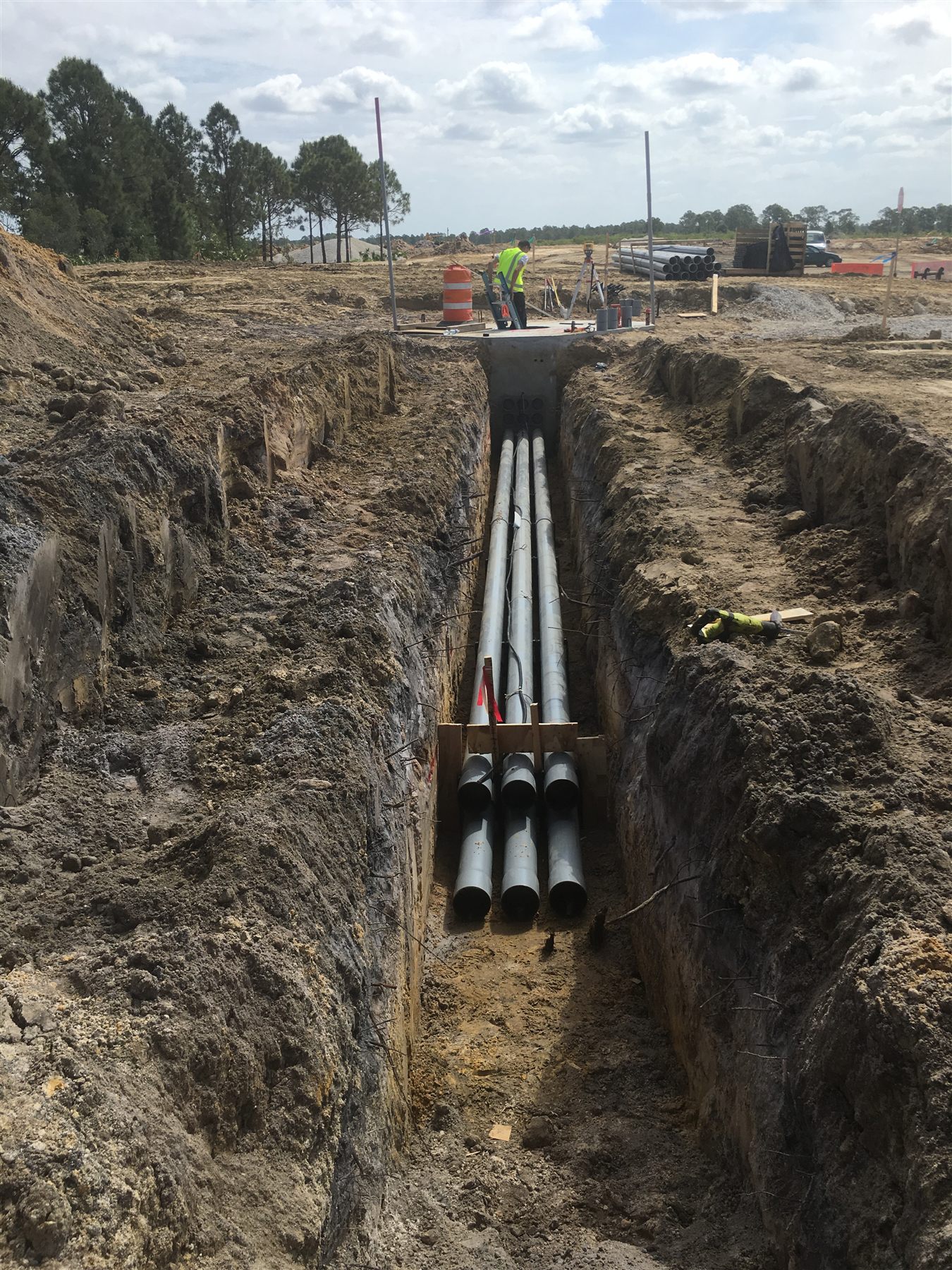
Phased communities often contain utility loops, future stub-outs, sleeves, common trenches, roadway crossings, and temporary connections that will not be used immediately. These features need clear coordinates, elevations, caps, markers, protection, and redline records. A future connection that cannot be found or has been damaged can disrupt a later phase long after the original crew demobilizes.
Create a corridor matrix showing each utility, owner, size, material, alignment, structure, crossing, release phase, testing requirement, and status. Compare civil, electrical, communications, landscape, and roadway drawings before structures or finished grades limit access.
Make long-lead and approval dates part of the civil schedule
Lift-station equipment, electrical gear, controls, telemetry, specialty structures, utility materials, and agency reviews may control turnover even when earthwork and pipe installation are progressing. Procurement logs should use the same required-on-site and in-service dates as the baseline schedule.
This is especially important when a phase depends on a complete system rather than an isolated component. A wet well without permanent power, a force main without clearance, or a roadway without accepted drainage may not support the planned release. Assign an owner to each dependency and review it at the same cadence as field production.
Plan for the corridor, not just the parcel
The Charlotte County service-area page highlights how Babcock Ranch and Burnt Store Road activity connects Charlotte and Lee counties. Roadway studies, planned developments, utility master planning, and public-facility investment are signals that access and infrastructure will continue to influence construction packaging in the corridor.
Each project still needs its own current research and approvals. The presence of regional growth does not establish utility capacity, permit status, funding, or construction timing for a particular parcel. Owners and contractors should verify those facts with the applicable agencies, utilities, engineers, and current project documents.
Account for weather and temporary conditions over a longer horizon
Multi-phase projects experience more seasonal cycles. Temporary drainage, stabilized access, erosion controls, dewatering, stockpile management, and storm preparation need durable ownership. A temporary condition that works for two weeks may not remain acceptable through multiple rainy seasons or shifting haul routes.
Plan how drainage and access change as ponds, storm structures, roads, and pads are completed. Keep an updated recovery plan for major rain events. Protect installed utilities from construction traffic and confirm that future excavations will not undermine completed work.
Close each phase as if the team may change
Long projects outlast individual assignments. Redlines, test reports, inspections, photographs, material records, startup documents, and acceptance letters must be stored in a structure that a new team member can understand. Close out systems and phases continuously instead of carrying a single unresolved list to final buildout.
For the general contractor, a phase-turnover dashboard can show physical completion, testing, documentation, agency review, owner acceptance, and remaining restrictions. That makes the difference between “installed” and “usable” explicit.
Bring corridor thinking into the bid
When requesting a proposal, include the overall phasing plan, not only the next construction set. Identify future utility connections, temporary work, release criteria, long-lead responsibilities, access changes, and the systems that must become operational first.
Planning work in Babcock Ranch, the Burnt Store Road corridor, or elsewhere within the five counties served? Send Bravo Site Works the plans and phase schedule to begin a project-specific conversation about utility, earthwork, access, and turnover strategy.