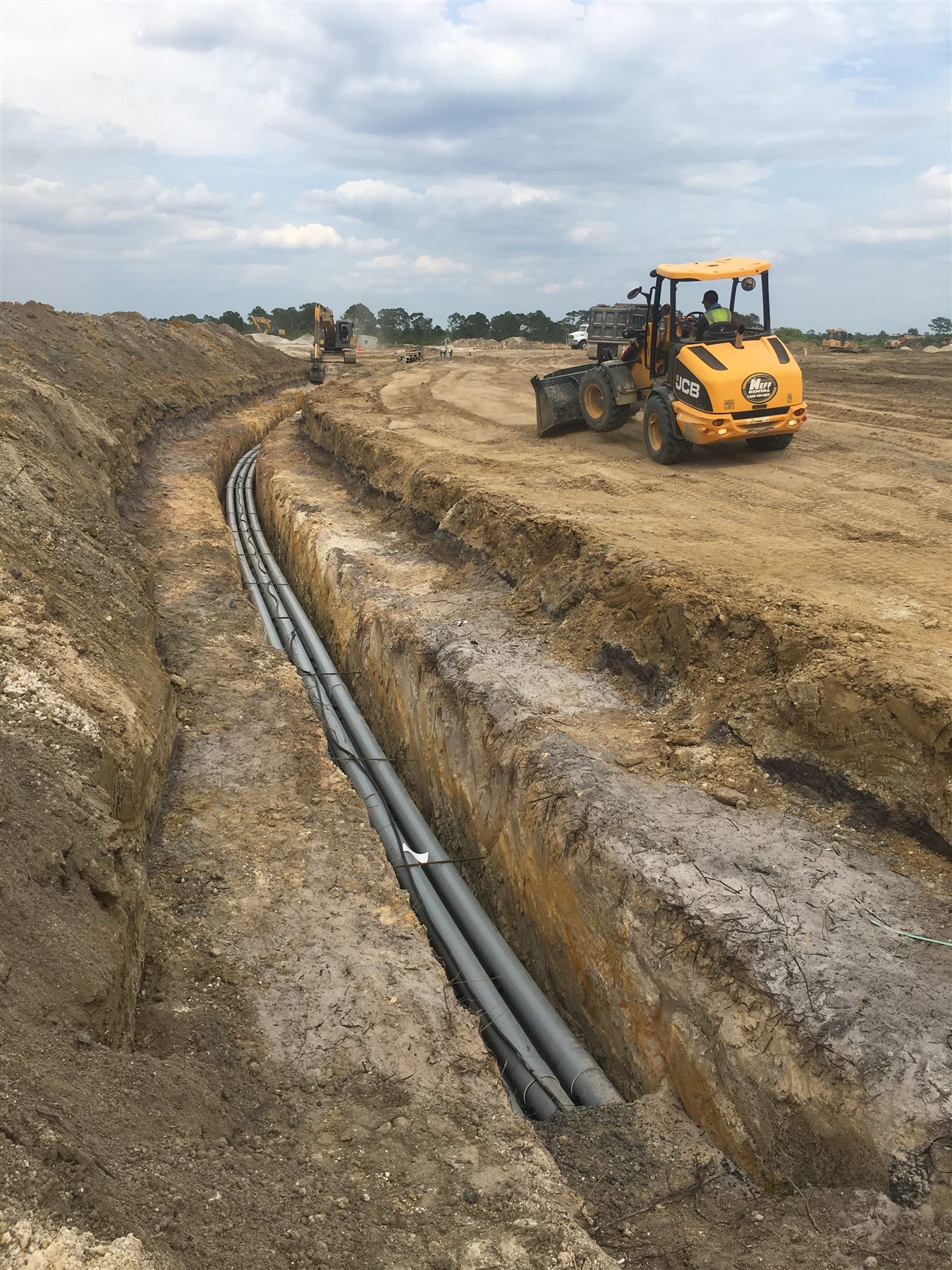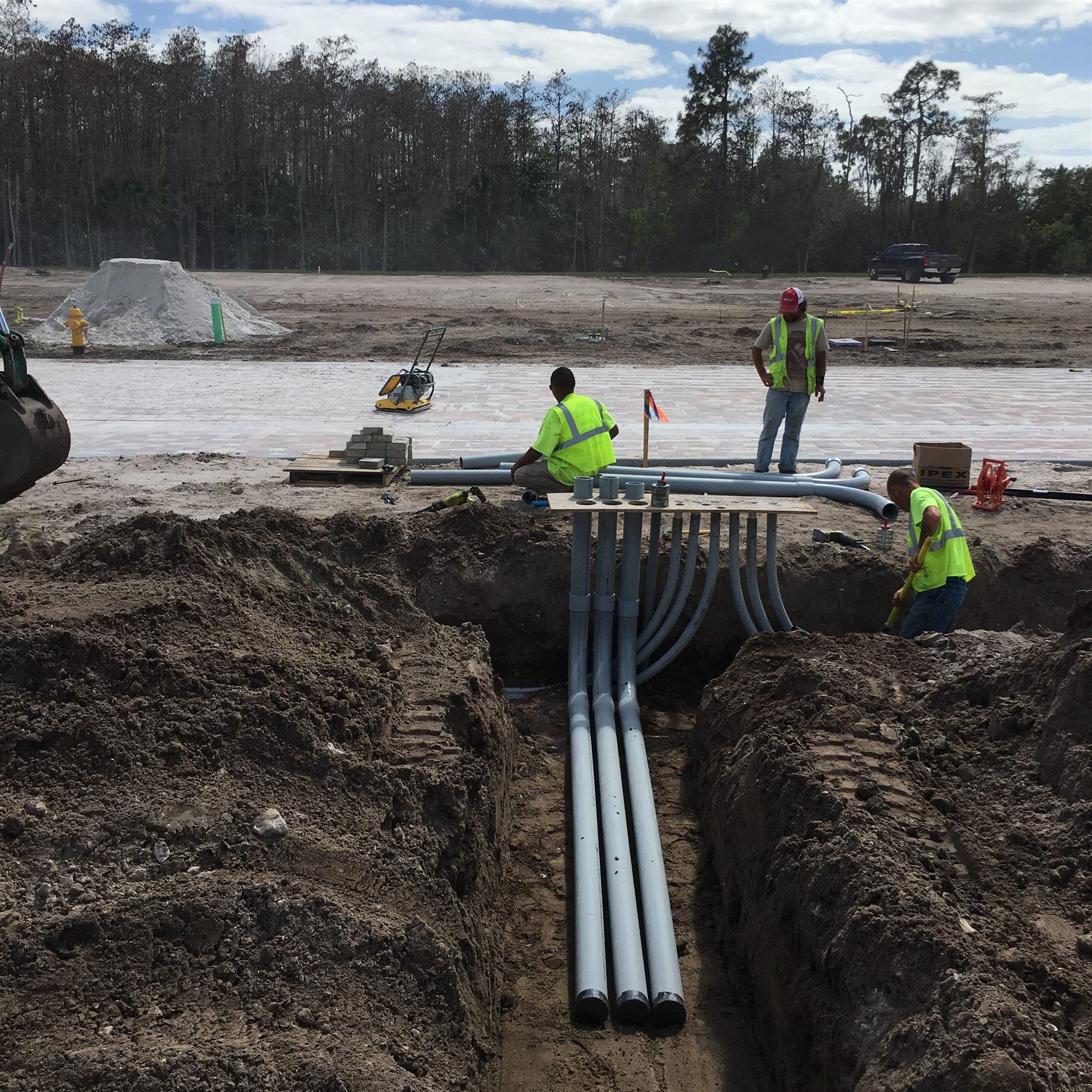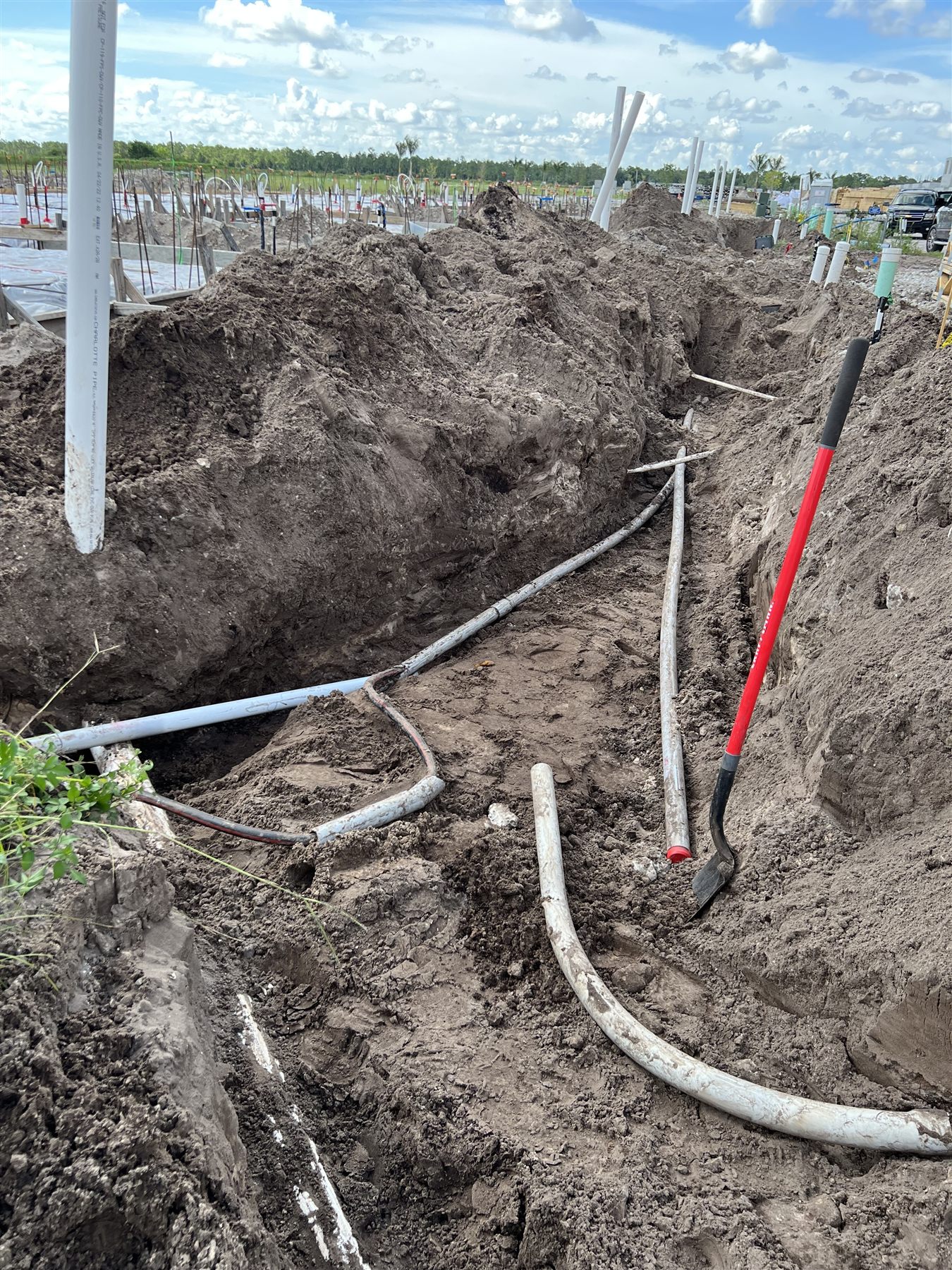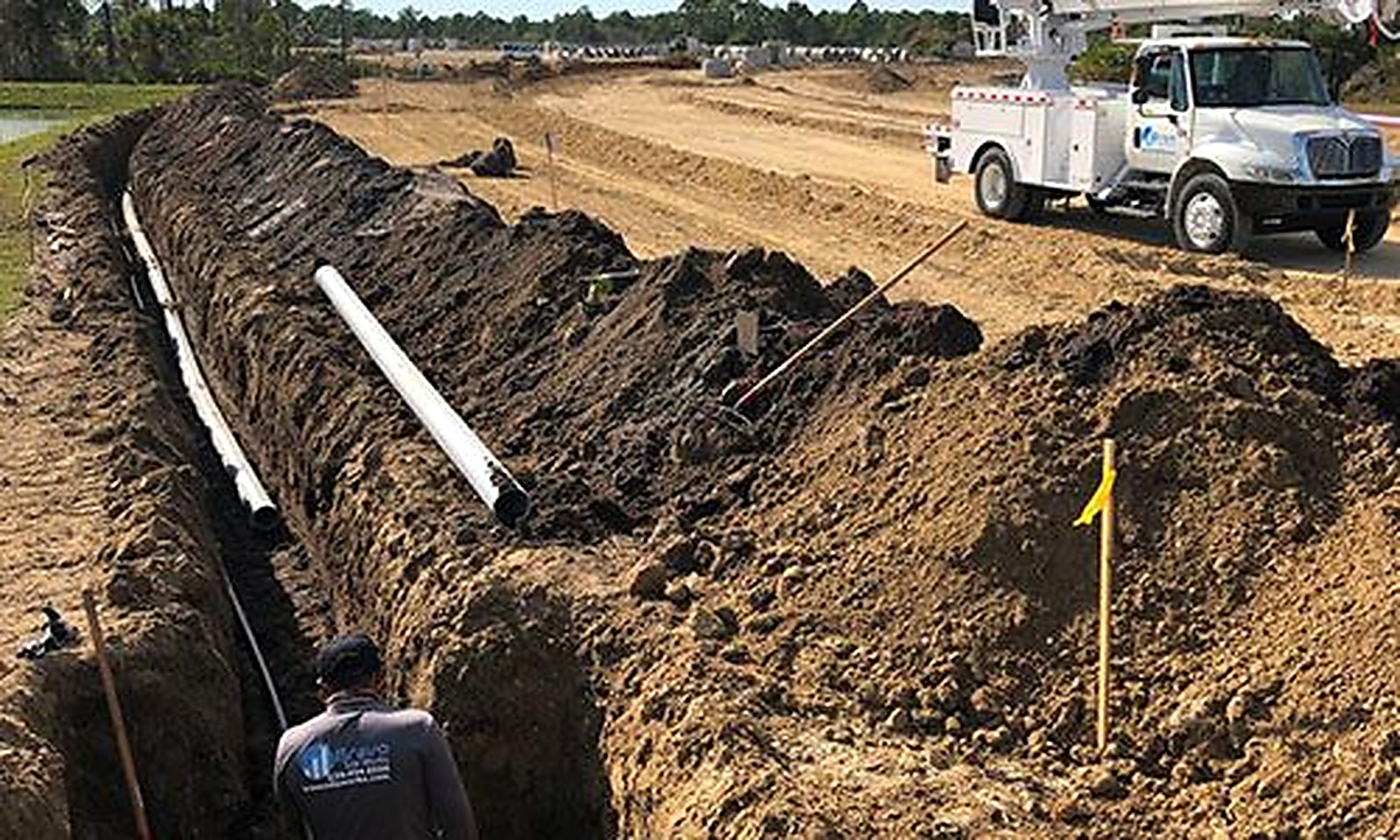
Dewatering is often carried as a simple bid item even though it can influence excavation safety, pipe bedding, structure setting, concrete work, production, environmental compliance, and neighboring improvements. In Southwest Florida, shallow groundwater, seasonal rain, sandy soils, surface-water connections, and project-specific discharge limits can make the difference between a workable excavation and an unstable schedule.
There is no universal method or production assumption. The engineer, geotechnical information, permit conditions, excavation geometry, soil profile, nearby structures, and responsible contractor's plan should control the approach. The purpose of early planning is not to choose equipment from a generic checklist. It is to define the information, responsibility, and monitoring needed for the actual site.
Build the scope from subsurface information
Start with borings, groundwater observations, seasonal-high-water information, soil classifications, environmental reports, and utility or structure elevations. Compare the investigation depth and location with the planned excavation. A boring far from a deep wet well may not describe the condition crews will encounter.
The site development and earthwork quantity plan should also show ponds, low areas, proposed grades, temporary drainage, and excavation phases. Groundwater behavior can change as the site is cut, filled, or connected to new drainage. Identify information gaps early enough for the owner and engineer to decide whether additional investigation is warranted.
Define performance instead of naming a pump
A complete plan should state the condition required: stable excavation, dry or controlled subgrade, allowable drawdown, discharge quality, settlement protection, backup capacity, monitoring frequency, and response thresholds. The contractor can then develop an appropriate system within the project requirements.
Possible methods may include sump pumping, wellpoints, deep wells, eductors, cutoff measures, staged excavation, or combinations, but the selection is site-specific. Pump size alone is not a design. Soil permeability, excavation depth, recharge, run length, power, header layout, redundancy, and treatment can control performance.
Make discharge a first-order constraint
Where can the water legally and physically go? The answer may involve permit conditions, local requirements, treatment, turbidity control, erosion prevention, energy dissipation, sampling, monitoring, and limitations on rate or location. Discharge should not create flooding, scour, sediment transport, slope failure, or impacts to neighboring property.
Clarify who obtains approvals, provides treatment, monitors quality, maintains records, relocates hoses, fuels equipment, and responds after hours. If offsite hauling or specialized treatment could be required, show how that risk is handled in the bid. Never assume an adjacent inlet, pond, or low area is an approved discharge point.
Connect dewatering to excavation safety and quality
Removing visible water does not make an excavation safe. Water can change soil behavior, create piping or boiling, soften subgrade, erode bedding, undermine adjacent areas, and affect protective systems. The competent person must evaluate conditions continuously and after rain, shutdowns, system changes, or other events that could alter stability.
Quality is linked to the same controls. Pipe line and grade, bedding, structure bases, concrete placement, compaction, and testing depend on a stable condition. A rushed restart after system failure can create work that later settles, leaks, or fails inspection.
On a Lee County project, a sequence near low-lying areas or major drainage features may need different temporary controls than a compact infill site. The documents and field condition remain the authority.
Schedule setup, operation, maintenance, and recovery
Dewatering begins before the target excavation and may continue through structure setting, pipe installation, backfill, concrete cure, or other milestones. The baseline schedule should include installation, startup, stabilization, monitoring, moves, maintenance, standby equipment, and removal. Permanent power is not always available, so generator capacity, fuel, noise, access, and backup should be addressed.
Also plan recovery after a major rain event or power loss. Who checks the system, excavation, discharge route, protective measures, survey control, and adjacent work? What conditions must be restored before entry or production resumes? A written restart gate protects both people and installed work.
Ask better dewatering questions at bid time
Provide the geotechnical report, current plans, excavation depths, structure details, environmental and discharge requirements, schedule, site access, power availability, and known neighboring constraints. Identify whether dewatering is delegated design, a contractor means-and-methods item, or governed by a specific engineered plan.
Planning deep utilities, structures, or earthwork within the five Southwest Florida counties served? Send Bravo Site Works the subsurface information and bid documents. A clear dewatering responsibility matrix can be developed before groundwater becomes a field surprise.